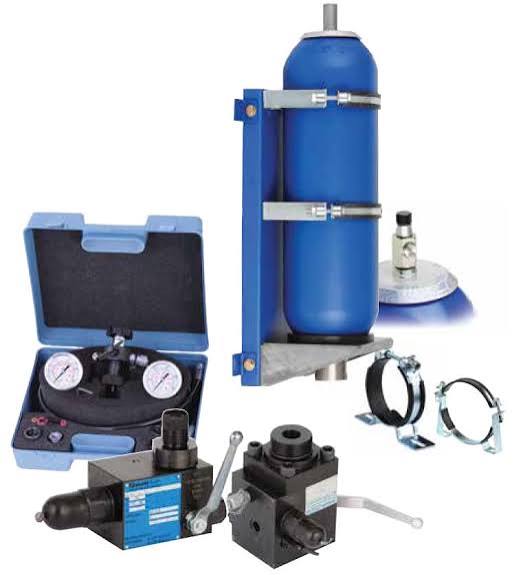
Accumulators
Bladder Accumulators
Bladder accumulators play a critical role in hydraulic systems by providing precise fluid control, stabilizing pressure, and improving overall system efficiency. Inside the accumulator, a flexible rubber bladder separates the hydraulic fluid from a pre-charged gas—usually nitrogen. As system pressure rises, fluid compresses the gas, storing energy that can be released instantly when required. This rapid response allows bladder accumulators to smooth pressure spikes, reduce pulsations, and maintain consistent flow in demanding applications.
Their ability to deliver immediate energy makes them ideal for systems requiring quick actuation, shock absorption, or emergency backup power. Because the bladder reacts faster than other accumulator types, it supports high cycling frequencies and improves machine responsiveness. This contributes to reduced component wear, enhanced operator control, and improved reliability across mobile, industrial, mining, and agricultural equipment.
Bladder accumulators are also designed for durability, with robust shells, replaceable bladders, and low maintenance requirements. By optimizing energy usage—storing excess pressure and releasing it when needed—they help reduce pump workload and overall energy consumption. This leads to longer pump life and lower operating costs.
In any hydraulic system where stability, efficiency, and rapid reaction time are essential, they provide a dependable and cost-effective solution.
Catalogues
bosch-rexroth-ra50175-b-2016-07-manual
bosch-rexroth-re-50171-b-2021-07-manual
olaer-accumulator-as1210-manual
omt-accumulatori-sacca-en-1-manual


Piston Accumulators
Piston accumulators provide highly reliable energy storage and fluid control in hydraulic systems, making them essential components in applications that demand stable pressure and consistent performance. Inside the accumulator, a free-moving piston separates the hydraulic fluid from a pre-charged gas. As system pressure increases, the piston compresses the gas, storing energy that can be released whenever the system requires additional flow. This allows them to respond smoothly to pressure fluctuations, maintain system stability, and support equipment during peak demand.
Their robust, cylindrical design allows them to handle extremely high pressures and large fluid volumes, which is why they are commonly used in industrial machinery, mining equipment, mobile hydraulics, and heavy-duty manufacturing systems. Because the piston moves on a guided path, these accumulators offer excellent control over compression ratios, making them ideal for precise pressure regulation, emergency energy reserves, shock absorption, and fluid make-up.
Piston accumulators are also known for their durability and long service life. They can operate in harsh conditions, tolerate temperature variations, and be mounted in any orientation without affecting performance. With proper maintenance, they provide reliable, repeatable energy delivery while reducing the workload on pumps, improving system efficiency, and minimising downtime.
Catalogues
Hystat-Piston-Accumulators-Gas-Bottles-Brochure
Hystat-Piston-Accumulators-Operating-Instructions-Brochure
Hystat-SS-Piston-Accumulators-Brochure
hystat-operating-instructions-manual
omt-accumulatori-pistone-datasheet
omt-accumulatori-pistone-en-1-datasheet
Diaphragm accumulators
Diaphragm accumulators play an important role in hydraulic systems by ensuring stable fluid management, pressure control, and consistent system performance. Inside the accumulator, a flexible rubber diaphragm separates the hydraulic fluid from a pre-charged nitrogen gas chamber. As system pressure increases, the diaphragm compresses the gas, storing energy that can be released instantly when the system requires additional flow. This fast reaction time allows diaphragm accumulators to smooth out pressure fluctuations, reduce pump pulsation, and support the hydraulic circuit during sudden demand changes.
Because of their compact design and minimal moving parts, diaphragm accumulators are particularly well-suited for low to medium pressure applications. They are frequently used in mobile equipment, lubrication systems, agricultural machinery, and industrial tools where rapid response, efficiency, and consistent performance are essential. Their lightweight construction also makes them ideal for installations where space and weight are limiting factors.
Diaphragm accumulators offer excellent reliability and long service life when properly sized and maintained. They handle frequent cycling well and can operate in a wide range of environmental conditions. By storing excess pressure and releasing it as needed, they reduce pump strain, improve system efficiency, and help minimize wear on other hydraulic components, resulting in lower operating costs and improved system stability.
Catalogues
bosch-rexroth-re50150-b-2020-10-manual


Surge Accumulators
Surge accumulators are critical components in hydraulic systems that experience rapid pressure changes, high flow variations, or sudden load shifts. Their primary function is to dampen pressure surges by absorbing excess fluid during spikes and releasing it back into the system as pressure drops. This buffering action stabilizes the hydraulic circuit, reduces system stress, and ensures smoother, more predictable performance across a wide range of operating conditions.
Inside a surge accumulator, either a bladder, diaphragm, or piston separates the hydraulic fluid from a pre-charged gas. When a pressure surge occurs—often caused by valve closures, pump start-ups, or directional changes—the trapped gas compresses, allowing the accumulator to take in fluid almost instantly. Once normal pressure is restored, the stored energy is released, helping maintain steady flow and preventing harmful pressure oscillations.
Surge accumulators are especially valuable in applications where equipment must be protected from shock loads, vibration, or water hammer. They are commonly used in mining machinery, industrial processing systems, mobile equipment, marine hydraulics, and long hydraulic line installations.
By reducing pressure peaks and minimizing mechanical stress, surge accumulators improve system longevity, safeguard sensitive components, and enhance overall operational safety. Their ability to stabilize hydraulic performance results in fewer breakdowns, reduced maintenance costs, and more reliable day-to-day operation.
Catalogues
Accumulator Accessories
lorem ipsum dolor
Catalogues
bosch-rexroth-re50129-b-2022-04-manual
bosch-rexroth-re50144-b-2013-08-manual
omt-accumulatori-accessori-1-manual
omt-accumulatori-accessori-manual
Misc Accumulator Datasheets
bosch-rexroth-ba-hydrospeicher-dz32-2008-12-17-manual
bosch-rexroth-ra50175-b-2016-07-manual-review
bosch-rexroth-re50129-b-2022-04-manual-review
bosch-rexroth-re50144-b-2013-08-manual-review
bosch-rexroth-re50150-b-2020-10-manual-review
bosch-rexroth-re-50171-b-2021-07-manual-review
olaer-accumulator-as1210-manual-review
olaer-as1210final-manual-review
omt-accumulatori-280622-manual
omt-accumulatori-280622-membrana-1-datasheet-review
omt-accumulatori-280622-membrana-datasheet-review
omt-accumulatori-accessori-1-manual-review
omt-accumulatori-accessori-manual-review
omt-accumulatori-pistone-datasheet-review
omt-accumulatori-pistone-en-1-datasheet-review