
Hydraulic systems are the workhorses of mining, industrial equipment, agriculture machinery and manufacturing. But there’s one thing that can quietly destroy performance, damage components and shut operations down faster than almost anything else: heat.
As hydraulic oil moves through pumps, valves, hoses and cylinders, it naturally generates heat. Left unmanaged, that heat builds up and thins your oil, wears out seals, reduces pump efficiency and shortens the life of your entire system.
That’s where oil coolers come in.
This guide explains—in simple, practical terms—how oil coolers work, the different types available, and how to choose the right one for your application.
What an Oil Cooler Actually Does
Hydraulic oil temperatures rise due to:
- System pressure and flow
- Mechanical friction
- Environmental conditions (hot weather, enclosed engine bays)
- Long duty cycles
- Pump inefficiencies
- Reduces severity of heat cycles, reducing system fatigue.
When oil gets too hot, two key things happen:
- Viscosity drops
The oil becomes thinner, losing its ability to lubricate and protect surfaces.
- Oxidation accelerates
Hot oil breaks down faster, forming sludge and varnish that damage pumps, valves and motors.
A simple way to visualise an oil cooler:
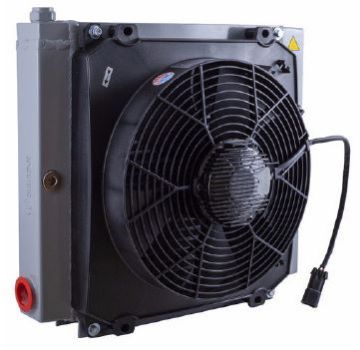
Imagine hot hydraulic oil flowing through a radiator-like unit. Air (or water) passes across the cooler’s surface. As the oil moves through thin internal passages, heat transfers out of the oil and into the air or water surrounding the cooler. The oil exiting the cooler is significantly cooler—ready to return to the system and keep everything running within safe temperature limits.
How Oil Coolers Work (Step-by-Step)
Regardless of type, all oil coolers follow the same basic process:
- Hot oil leaves the hydraulic system (usually from a return line or off a dedicated cooler circuit).
- Oil enters the cooler, flowing through channels, plates or tubes.
- Heat transfers from the oil to the cooling medium (air or water).
- Cooled oil exits and returns to the tank or system.
Air-Blast Cooling Explained:
Picture a heat exchanger with aluminium fins, similar to a radiator. A fan forces air across the surface, pulling heat away from the oil. This is the most common cooler type for mobile and industrial systems.
Water-Cooled Cooling Explained:
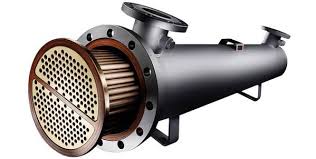
Oil flows through tubes that are surrounded by water. Heat transfers into the water, which is then flushed away or cooled externally. These coolers are compact and ideal for factories or systems with existing water supply.
Thermostatic Bypass Valves
Many coolers include a thermostat that bypasses oil until it reaches a certain temperature.
Why?
Because cold oil is thick, and forcing it through a cooler too early can cause unnecessary pressure drop. The bypass ensures oil only enters the cooler when it’s warm enough to flow freely. With this design your equipment will reach operating temp quicker, increasing system efficiency.
Why Oil Cooling Is Critical in Hydraulic Systems
Across mining, agriculture, manufacturing and industrial machinery, maintaining the right oil temperature is essential for system reliability.
Excess heat can lead to:
- Seal damage
- Varnish and sludge formation
- Loss of system efficiency
- Faster oil oxidation
- Pump cavitation
- Reduced component lifespan
- Unplanned downtime
Most hydraulic systems perform best between 40°C and 60°C, though some can operate slightly higher depending on viscosity requirements. Above 80°C, you dramatically increase wear, breakdown speed and risk of failure.
An oil cooler is not just a “nice-to-have”—it’s a protective layer between you and costly downtime.
Types of Hydraulic Oil Coolers (With Pros, Cons & Best Uses)
Below are the main cooler types used in industrial, mining, agricultural and manufacturing applications.
Air-Blast Coolers
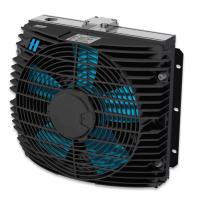
These use an electric or hydraulic-driven fan to force air across a finned heat exchanger.
Pros:
- Very common and cost-effective
- Easy to install and maintain
- Great for mobile equipment or dusty environments
- No need for water supply
Cons:
- Needs adequate airflow
- Larger size compared to water-cooled units
Best For:
- Tractors
- Excavators
- Crushers
- Power packs
- Drilling rigs
- Manufacturing machinery
- Any equipment running long hours or high duty cycles
Brands to consider: ASA Hydraulik, Emmegi, Exotech, Timalco Hydraulics
Water-Cooled (Shell & Tube) Coolers
Oil passes through metal tubes while water flows around them.
Pros:
- High cooling capacity
- Compact design
- Stable cooling regardless of ambient temperature
Cons:
- Requires a clean water supply
- More maintenance
- Potential for cross-contamination if seals fail
Best For:
- Industrial plant equipment
- Manufacturing presses
- Hydraulic power units with high heat loads
Popular suppliers: Olaer, ASA Hydraulik
Mobile Hydraulic Coolers
Designed specifically for equipment that operates at low speeds or heavy load cycles.
Pros:
- Rugged and compact
- Resistant to vibration
- Ideal for harsh environments
Cons:
- Limited sizes
- Can be louder due to high-efficiency fans
Best For:
- Agricultural machinery (tractors, harvesters)
- Skid steers
- Forestry equipment

Stacked-Plate / Heat Exchanger Coolers
These are typically used on transmissions or compact hydraulic systems.
Pros:
- High heat-transfer efficiency
- Good in confined spaces
Cons:
- More susceptible to clogging
- Higher pressure drop
Best For:
- Small hydraulic power packs
- Transmission cooling
- Low-to-medium flow applications
How to Choose the Right Oil Cooler
Choosing the correct cooler is about understanding how much heat your system generates and how harsh the working environment is.
Here are the key factors:
Heat Load
Every hydraulic system generates a percentage of heat based on inefficiencies.
A simple rule:
Heat load (kW) ≈ Hydraulic power × 0.2–0.3
(20–30% of hydraulic power often becomes heat.)
Ambient Temperature
Australia’s mining and agricultural environments often see ambient temps above 35°C, increasing cooling demands.
A cooler sized for Europe or the US may be undersized for Australian conditions.
Duty Cycle
- Constant duty (e.g., industrial press) → larger, stable cooling system
- Intermittent duty (e.g., loader) → medium cooler may be fine
Airflow & Placement
Air-blast coolers need airflow—avoid installing them in enclosed or stagnant zones.
Oil Flow Rate & Pressure Drop
Too much pressure drop across a cooler can strain pumps and valves.
Choosing a cooler with the right internal passage size is essential.
Oil Viscosity
Thicker oils require coolers with larger passages to prevent back pressure.
Contamination Levels
Dirty oil can clog coolers, especially stacked-plate types.
Simple Application Examples
- Mining crusher or power pack: Use an oversized ASA, Emmegi or Olaer cooler with high airflow.
- Agricultural tractor: Medium air-blast cooler from Exotech or Timalco.
- Manufacturing press: Water-cooled shell-and-tube cooler for stable temperature control.
What Size Oil Cooler Do You Need? (Simple Method)
Most users don’t need a full thermal engineering breakdown.
Here’s the simplest rule:
To size a cooler, you need:
- Oil flow rate (L/min)
- Max operating temperature
- Ambient temperature
- Hydraulic power (kW)
A quick guideline:
Choose a cooler that can remove 30% of your hydraulic power in kW.
Signs your cooler is too small:
- Oil consistently above 70–80°C
- Fan running constantly
- High-pressure drop through cooler
- Frequent oil changes due to oxidation
Troubleshooting Overheating Issues
If your machine still overheats, check these first:
✔ Blocked fins
Dust, seeds and debris can choke airflow.
✔ Fan not engaging
Electrical faults, worn motors or broken thermostats.
✔ Incorrect mounting
Cooler placed in a dead air pocket.
✔ Undersized cooler
Often the #1 cause of overheating.
✔ Wrong oil viscosity
Oil too thick → high pressure → more heat.
Oil too thin → poor lubrication → more friction.
✔ Contaminated oil
Sludge restricts flow, trapping heat.
Maintenance Tips for Maximum Cooler Life
- Clean air fins regularly (compressed air, not high-pressure water).
- Check for leaks or damaged fittings.
- Inspect fan motors and wiring.
- Monitor oil temp as part of regular servicing.
- Replace clogged or damaged heat exchanger cores.
A clean, properly sized cooler should give years of reliable performance.
Recommended Brands
Premium European coolers known for durability and strong cooling performance.
Italian-made coolers commonly used in industrial and mobile hydraulic equipment.
Great value coolers for mobile and general hydraulic applications.
Strong water-cooled and bladder-type accumulator systems; highly reliable.
Australian-manufactured coolers and components built for tough environments.
Need Help Choosing the Right Cooler?
Heat issues are one of the most common hydraulic problems we see — and the good news is that the fix is usually simple.
If you’re unsure which cooler fits your system, our team can size the right cooler for your machine and provide a competitive quote.
Contact Oil Solutions today for expert advice.