
Hydraulic pumps are the heart of any hydraulic system. They turn mechanical energy into hydraulic energy, creating the flow and pressure needed to move, lift, rotate, push, and power machinery. Whether you’re running equipment in agriculture, mining, industrial, or manufacturing, choosing the right pump is critical for performance, efficiency, and long-term reliability.
This guide breaks down the main hydraulic pump types, their applications, and a simple selection guide to help you determine which pump suits your machinery.
What Are Hydraulic Pumps?
A hydraulic pump converts mechanical power—usually from an engine or electric motor—into hydraulic flow. That flow is then used to operate:
- Cylinders
- Motors
- Steering systems
- Lift and tilt functions
- Winches
- Conveyors
- Presses
- Industrial machinery
The right pump ensures your system runs smoothly, stays efficient, and avoids premature failures. Because different hydraulic pump types handle flow, pressure, and load demands differently, matching the pump to the application matters.
Below are the pump types commonly used across Hydraulic machinery. This section explains how each pump works, where it’s used, and their strengths.
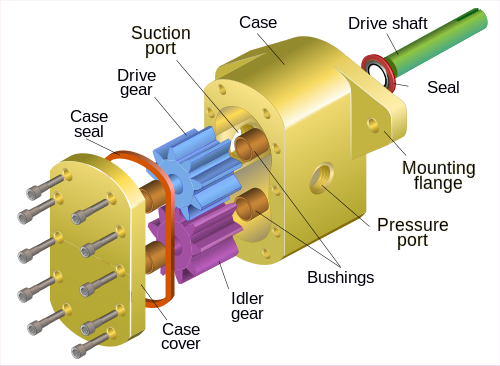
Gear Pumps
Simple, reliable, and cost-effective.
How they work:
Gear pumps use two rotating gears that trap and move oil from the inlet to the outlet.
Key benefits:
- Affordable
- Easy to maintain
- Very reliable
- Handles dirty or contaminated oil better than more complex pumps
- Compact and lightweight
Common applications:
- Agricultural tractors and attachments
- Industrial power packs
- Mobile equipment
- Forklifts
- Manufacturing machinery
Gear pumps are often the go-to choice when you need good performance without the complexity or cost of piston or vane pumps.
Vane Pumps
Quieter and smoother operation.
How they work:
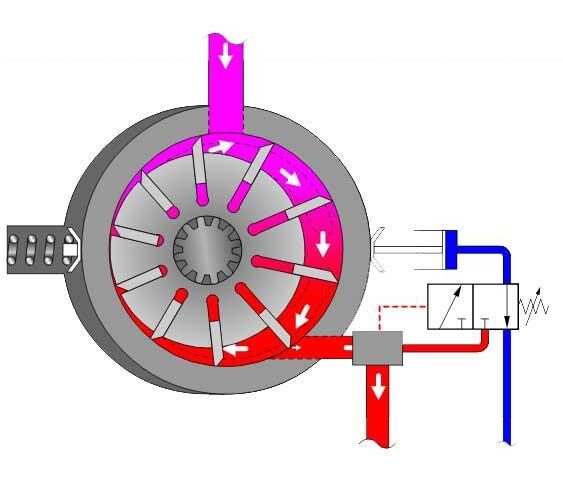
Inside a vane pump, sliding vanes move in and out of a rotor. This design allows for very smooth, low-noise oil flow.
Key benefits:
- Quiet operation
- Very smooth flow
- Good efficiency
- Excellent for factory and industrial environments
Common applications:
- Manufacturing machinery
- Plastics and injection moulding equipment
- Industrial power units
- Light mobile machinery
Vane pumps are ideal where noise levels, smooth flow, and consistent pressure are important.
Double Vane Pumps
Two pumps in one housing for mixed flow demands.
How they work:
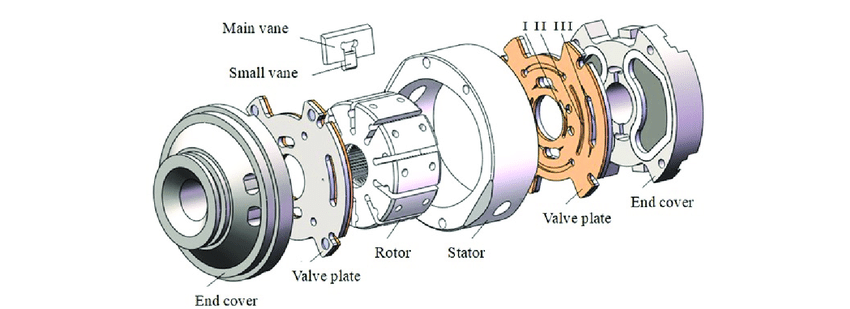
A double vane pump combines two separate vane pump units into one compact body. Each section can supply different flows or feed different circuits.
Key benefits:
- Run two functions from one pump
- Better efficiency than using two individual pumps
- Lower plumbing complexity
- Great for dual-circuit systems
Common applications:
- Industrial machines with multiple hydraulic functions
- Mobile equipment needing separate flow supplies
- Systems that require low pressure + high pressure flow simultaneously
If a machine needs independent circuits but you want to minimise cost and footprint, a double vane pump is an excellent option.
Piston Pumps
High-pressure performance for demanding machines.
How they work:
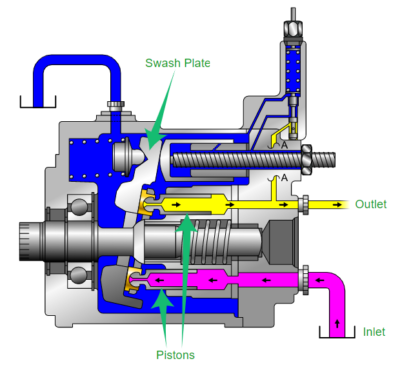
Piston pumps use multiple pistons arranged in a cylinder block, generating high-pressure, high-efficiency flow.
Key benefits:
- Handles very high pressures
- Extremely efficient
- Great for continuous-duty or heavy-duty systems
- Widely used in mobile and high-power machinery
Common applications:
- Mining machinery
- Construction equipment
- Industrial presses
- High-demand agricultural machinery
- Manufacturing equipment needing consistent pressure
Piston pumps are often used where reliability and power matter most, especially in variable displacement designs.
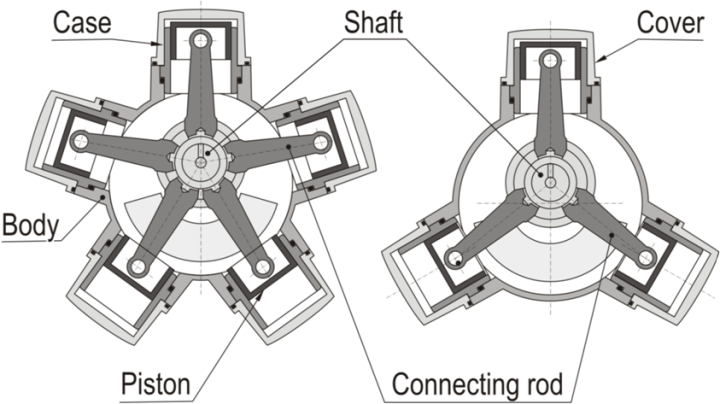
Radial Piston Pumps
Precision and high-pressure capability.
How they work:
Radial piston pumps have pistons arranged radially around a central drive shaft. This design allows for very high pressures and exceptionally accurate flow control.
Key benefits:
- High-precision flow
- Excellent for extreme pressures
- Very long lifespan
- Suitable for demanding industrial environments
Common applications:
- Hydraulic presses
- Test benches
- Industrial clamping systems
- Applications needing precise, steady flow
These pumps are common in specialised industrial equipment where accuracy is key.

Hand Pumps
Simple manual pumps for emergency or low-volume use.
How they work:
A hand-operated lever pushes fluid through the system manually.
Key benefits:
- No power source needed
- Portable
- Extremely reliable
- Great for backup systems
Common applications:
- Mobile equipment
- Emergency hydraulic operation
- Small lifting or jacking systems
- Pressure testing
- Maintenance use in workshops
Hand pumps are low-cost and essential for manual hydraulic functions or backup systems.
Hydraulic Pump Applications (Where These Pumps Are Used)
Across industries, hydraulic pumps power a massive range of functions.
Here’s a quick overview:
Agriculture:
- Tractors
- Harvesters
- Seeders
- Feed mixers
- Implements (lifts, steering, PTO-driven equipment)
Mining:
- Drilling rigs
- Support equipment
- Underground machinery
- Conveyors
- Lifts and handling equipment
Industrial:
- Presses
- Injection moulders
- Manufacturing lines
- Power units
- Clamping and cutting machines
Manufacturing:
- Automation systems
- Packaging machinery
- Robotics
- Material handling
- Processing lines
These examples reinforce how choosing the right pump directly affects performance, uptime, and operating costs.
How to Choose a Hydraulic Pump (Selection Guide)
Picking the right pump doesn’t need to be complicated.
Use this checklist to narrow down your options:
What pressure and flow do you need?
- High pressure + high performance → Piston pump
- Medium pressure + smooth operation → Vane or double vane pump
- General-purpose flow → Gear pump
What is the machine environment?
- Dusty, harsh, or dirty oil conditions → Gear pump
- Quiet factory or indoor facility → Vane pump
- Precision industrial environment → Radial piston pump
How many functions need hydraulic flow?
- One circuit → Gear, vane, or piston
- Two circuits with different flow needs → Double vane pump
What’s your duty cycle?
- Continuous high load → Piston pump
- Light to medium intermittent use → Gear or vane pump
Do you need manual/backup operation?
- Yes → Hand pump
Consider cost vs performance
- Lowest cost → Gear pump
- Best long-term efficiency → Piston pump
- Balanced performance + quiet operation → Vane pump
This guide helps narrow down what makes sense for your hydraulic pump application, and keeps the process simple and practical.
Recommended Suppliers
Oil Solutions supplies pumps from trusted global manufacturers, including:
- ASA Hydraulic
- Bucher Hydraulics
- Caproni
- Casappa
- HV Hydraulics
- Hydraulics Network
- Hytek
- Koreson
- Metaris
- PWG
- Ronzio
- Southcott
- Timalco Hydraulics
- Vivoil
- Yeoshe
These brands cover every hydraulic pump type mentioned, from gear pumps to piston and vane options.
Need Help Choosing the Right Pump?
Understanding hydraulic pump types is the first step — choosing the right one for your exact machine is where our team can help.
If you’d like assistance or want a quote for the pump that best fits your application, our team is always happy to help.
Get in touch and we’ll guide you toward the right solution for your equipment.